
I teach art to students of all ages and levels, and they often tell me, at least when I first start to work with them, “My painting stinks,” “I don’t have any talent,” “I’m not creative,” etc. (Yes, even graduate students tell me this.) Whenever I hear this, I threaten to bring my first-ever painting in to class to show them that it isn’t “talent” that’s important, but how you apply yourself to your development as an artist. NO ONE sits down and makes a beautiful painting.
As Twyla Tharp points out in her wonderful book “The Creative Habit,” even Mozart, who had the unique good fortune of hereditary natural ability and early opportunities to compose and perform, didn’t just sit down and write breath-taking music. A major part of what made him a genius was the hours, days, years of constant practicing, listening, comprehending, and allowing himself to create. Tharp says that, by his early 20s, Mozart’s hands were already deformed from having logged in countless hours of playing the keyboard.
So here it is … the first painting I ever made. (It’s in oil.)
It was made during my first semester of painting at the Art Institute of Boston in 1987, an experience that sounds similar to the kind of beginning in art that many of my students describe as having before they get to my class. That is,
with 1 or 2 exceptions, the professors gave NO technical information whatsoever, just left me and my classmates on our own to try and figure out how to use the materials and make the image look three-dimensional.
It’s interesting to me, in looking at this painting, to note that the objects are huddled against the background, as if they are terrified. Because that is certainly the way I felt at the time! (The saying goes that all works of art are self-portraits …)
This professor gave no demonstrations or personal advice, but after several sessions with each still-life, she would line all of our paintings up against the wall and tell us which ones were “bad” and which ones were “good.” I guess a general critique of this sort might have been visual training in what worked and what didn’t, but I just remember being frightened and confused the whole time. (I was too young to be indignant that she was being paid for not doing her job!)
I see from this picture that I had some natural inclination of how to suggest value, render objects and use negative space. But I certainly had no idea how to mix colors, record details, or place my objects so as to tell a story. (All things which are relatively easy to learn, with decent instruction.) I didn’t even know how to tell if I was finished or not! Basically, I was lost.
Luckily my love for painting helped me determine to continue beyond this abysmal initial experience. Many students get stuck at this stage and abandon art altogether because they think they aren’t good at it. That isn’t the point: without instruction and practice, one can’t learn how to see and how to use the materials.
Lack of “talent” in drawing or painting is really just lack of experience. Anyone can learn to draw and paint by applying themselves to the task and persistently working at it. This painting, as a harbinger of my current artwork, is proof!
And once you learn the basics, then the real achievement can begin. You can play around with a range of styles and mediums, and finally learn to say what you and you alone can and want to say. What could be more rewarding and enjoyable?


 I teach art to students of all ages and levels, and they often tell me, at least when I first start to work with them, “My painting stinks,” “I don’t have any talent,” “I’m not creative,” etc. (Yes, even graduate students tell me this.) Whenever I hear this, I threaten to bring my first-ever painting in to class to show them that it isn’t “talent” that’s important, but how you apply yourself to your development as an artist. NO ONE sits down and makes a beautiful painting.
 Just now I decided that it might be an interesting exercise to make a list of the exhibits I’d been in over the course of my career so far, divide them into the shows that were rewarding experiences and those that weren’t rewarding, and write down why. I thought this might help guide me in choosing where to focus my attention in future endeavors.
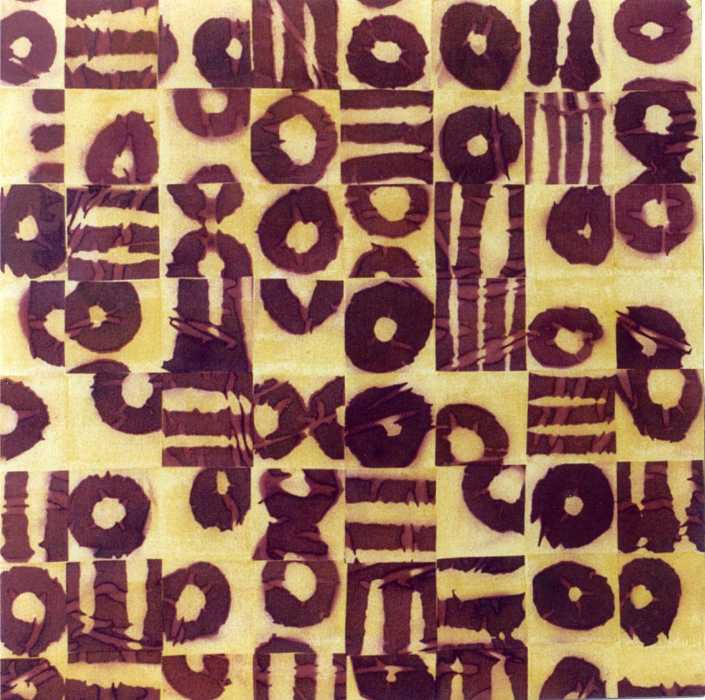 Phew, just finished my 10-piece "Autumn Lines" series, and they're heading to the photographer's next week. It feels like a big project has been completed, and I'll probably take a bit of a rest before I paint that intensely again.

 I'm going through old art-career-related photos, and came across these promotional portraits that my husband took of me in 2003. I remember he kept exhorting me to smile during this photo session, but I wanted to seem like a serious (literally) artist.
 Much ink is spilled (or whatever the online equivalent is these days) on the subject of the rejection letter. I’ve addressed it on this blog and countless other artist bloggers have too. (One of my favorite discussions of the subject is this post by Providence artist Kathy Hodge, and here's another good one on Deanna Wood's blog). Somehow, sharing our experiences can help take the sting out of opening that envelope or clicking on that email and reading the dreaded words, “Dear Artist, We regret to inform you that your work was not chosen …”
 Today is the fourth anniversary of my first blog post! I have had a LOT of fun writing in this blog over the last four years. Some of my favorite posts have included: